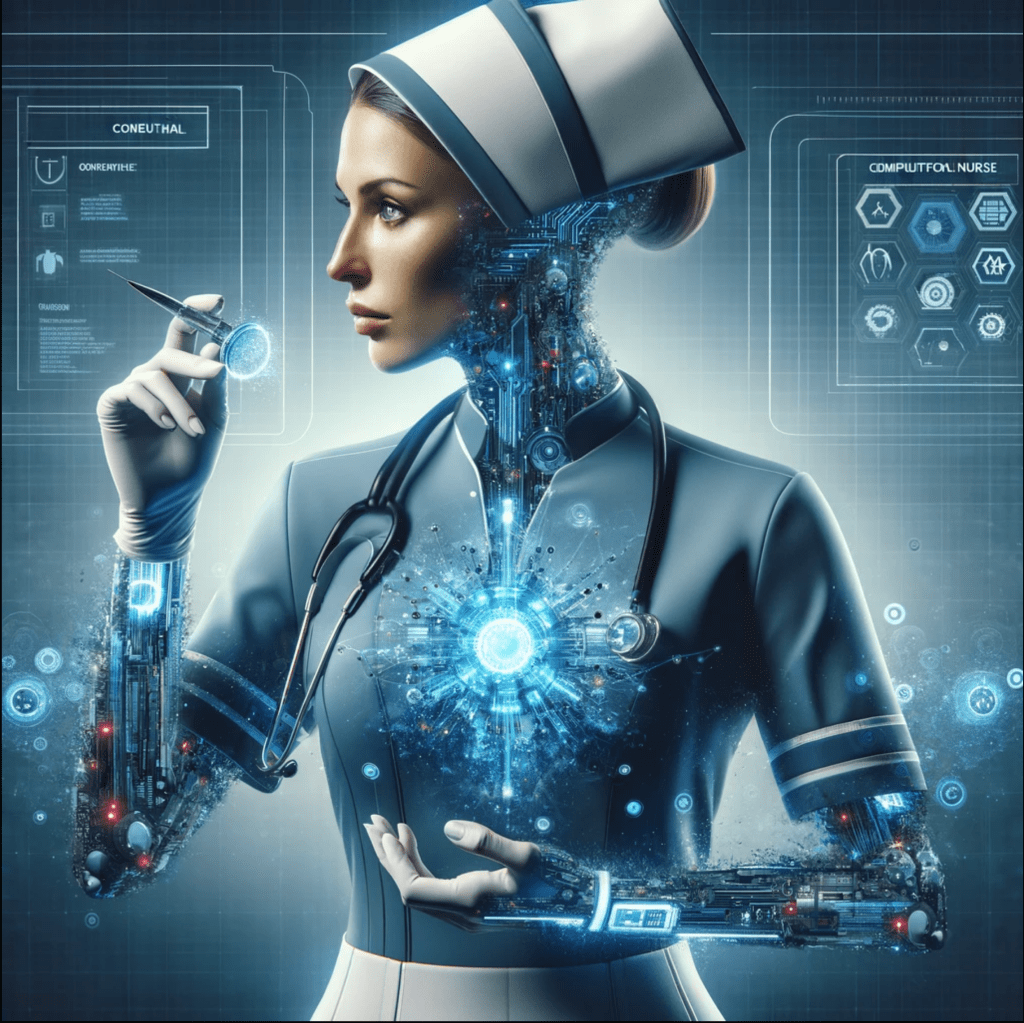
AI is coming to healthcare. Probably not nearly as quickly as the hype cycle suggests, but it will come. Doctors are already preparing for this transition by training in AI and collaborating with AI researchers to deploy and assess clinical AI projects. This will slowly start to change how healthcare is delivered. But it could end up being something that happens to nurses, instead of something nurses help shape. Nurses often play a pivotal role in helping patients navigate the bewildering corridors of healthcare delivery. If those corridors are to be cluttered with AI then nurses will need to be able to navigate it themselves: for their sakes and as well as their patients. This doesn’t mean every nurse needs to know everything about AI, far from, but like any medical speciality, some nurses should specialise in AI: the Computational Nurse.
Some people may consider a computational nurse anathema to the art of nursing. But it is no great departure from where modern nursing started. The Lady of the Lamp herself cast her light with data, and Nightingale’s use of the quantitative sciences showed us its value to patient outcomes. Nursing has always been art and science. It seems obvious to me that computational nurses will be needed, for medicine will become computational and if nurses are to help patients navigate increasingly digitised healthcare, they need to understand it themselves.
Computational modelling, of which ‘AI’ is a subset, is just a different way of understanding problems and processes. Nursing is a diverse profession, and I know at least some nurses already have a tendency to think this way. It can also be trained and honed with practice. There are many ways to get started.
The AI Nurses Network provides training and has seed funding for some small projects. In the UK there are Fellowship in Clinical Artificial Intelligence available to most healthcare practitioners, though the overwhelming majority of such fellowships go to doctors, with no nurses I could find. And with both AI and healthcare likely to remain government priorities for a while, there are likely to more and more opportunities. Computer scientists and AI researchers are always looking out for clinical partners. If you have a project in mind, start perusing university websites, find people with skills you think relevant (many of my collaborations have started that way). Keep an eye out for any little pots of money for AI training or projects. It will be hit and miss at first, but you’ll narrow it down with time.
But the easiest way to get involved is just to get stuck in. Download python and start tinkering and playing. Make a game, play with fractals, build a website. You’ll be rubbish at it, but you can find the joy learning.
Possible Futures
I can imagine a nurse led healthcare system in which nurses are the primary point of care. Alongside robust healthcare AI systems, such nurses in the community could diagnose, prescribe and refer to specialist doctors as required. However, this system would only work in as far as nurses would be able to trust the system. As well as having a number of tools available to interrogate such systems, knowing when to interrogate them would be a critical skill, as would understanding their more common failure modes. Some modes of failure are inevitable, and they will likely be very different from human failures. The art and science of such a nurse would be in leveraging human strengths and augmenting them with AI.
However, this will only happens if enough nurses have the energy to shape the profession.


 Nathan Blake
Leave a comment